Transport in Birmingham - Looking ahead to 2026
As we head into 2026, our Chair looks back at Birmingham’s transport achievements in 2025 and what we can expect in a pivotal year for the city.


As we head into 2026, our Chair looks back at Birmingham’s transport achievements in 2025 and what we can expect in a pivotal year for the city.
Looking back at 2025
This year has seen a fair number of achievements from Birmingham City Council. Early in the year saw the adoption of the Council’s new Road Harm Reduction Strategy, which effectively declared an end to old school road safety interventions and called for a change in direction to get deaths down. It’s unclear if the entire Council is on board with this message. Road deaths in the city have so far shown little sign of slowing down.
In new cycle route news, 2025 saw the delivery of a handful of cycle schemes: Cannon Hill Park to Moseley, further phases of Dudley Road and upgrading the A45’s parallel route on Bolton Road.
In the city centre, you can now cycle from Pigeon Park to Victoria Square and from Newhall Street to Temple Row following the first part of the Snow Hill Connectivity programme introducing changes to traffic flows.
Low traffic measures were put in without much fuss in Aston University’s campus. This is in stark contrast to proposals to address dangerous driving in West Moseley, with effective proposals regrettably abandoned mid-consultation.
Main roads speed limits have been reduced to 30mph. There are now only three roads in the city where the limit is 40mph or above.
Following the signing of a new regional joint working agreement between Councils, West Midlands Combined Authority, the Police and Crime Commissioner and West Midlands Police, enforcement stepped up a gear with new junction cameras installed, the A45 average speed camera zone extended and a late entry of a parking enforcement vehicle. Hopefully the first of wider rollouts. Sadly, West Midlands Police has overseen a decline in Operation Snap by deprioritising obstructive parking reports and stopping submission feedback under questionable GDPR-inspired grounds.
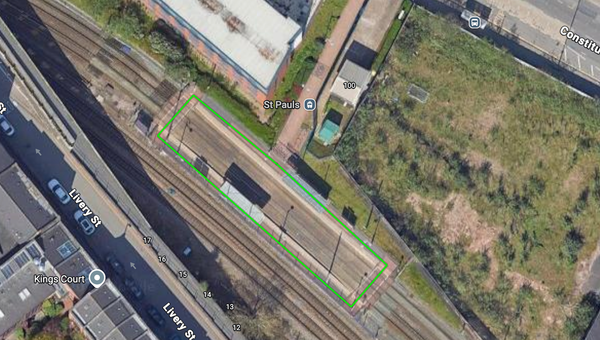
In public transport news, two new tram stops are now ready to enter service along with new bus stops and the Millennium Point Interchange which is already servicing the 61/63 route. Finishing touches aside, the three new rail stations on the Camp Hill line are now finally complete.
Bus franchising is moving forward, allowing the region to specify routes, ticket prices and vehicles. This will be delivered in phases, with the last phase complete in 2029.
There have been consultations galore, from local interventions to whole-corridor bus prioritisation. Authorities are now sitting on a whole host of projects to get to delivery.
Finally, the proposed city centre cycling ban PSPO has officially been thrown into the shredder. Good news given the Council’s insistence on shared paths through the city centre core.
Looking ahead to 2026
2026 is likely to be a year of huge change for Birmingham, both with all-out local elections taking place in May and with longer-term transport projects moving into delivery.
In theory, we’re approaching the midpoint for the city’s 2021 Transport Plan, which seeks to reallocate a third of road space, transform cycling and walking in neighbourhoods, transform the city centre and tame parking. In practice, the delivery of the transport plan will likely take an additional decade or so depending on capacity, leadership and future funding availability.
In January, the new regional micromobility contract will be announced. We’ve been sleuthing on GOV.UK and have found that the WMCA recently issued a contract award notice to Lime. This isn’t final because they are currently in a standstill period where the decision is open to challenge. A huge coup for the region if the award stands.
Work will also get under way to repave huge swathes of New Street and surrounding streets. This is going to be taking place until well into 2027 and will be a huge win for people who don’t like getting their feet soaked thanks to loose paving. Over on Dudley Road, the final phase of the cycle route outside City Hospital will be finished, finally bringing the project to a close.
February will see the 2027 to 2032 transport capital programme be published by an increasingly secretive West Midlands Combined Authority. The Rosewell Review is reviewing every project committed to. At the start of the review there was only around £485 million (out of £2.2-ish billion) of uncommitted cash.
We expect most of Birmingham’s share of regional cash to go to support East Birmingham’s Sports Quarter, the first batch of neighbourhood major scheme areas and delivering a load of bus schemes deferred by the Mayor from the 2022 to 2027 funding period. We don’t expect to see much in the way of smaller everyday journey improvements - the perils of chasing Growth™.
Also in February, West Midlands Trains - the company that runs local rail services in the wider West Midlands area and London Northwestern services - returns to public ownership. It’s unclear what immediate new benefits we’ll see as the rail industry has a good relationship with our Combined Authority on things like ticketing, rolling stock and service expansion.
Early in the year, we’ll see new tram extensions and the Camp Hill Line stations finally open. Hopefully West Midlands Trains has some spare rolling stock knocking about for what’s bound to be a line that exceeds capacity from day one. Read our guide to season tickets for the new stations on Instagram. We’ll also see further bus rapid transit (Sprint) works on the Birmingham to Solihull (A45 Coventry Road) section.
The one-way systems in Holyhead and new resident permit areas near QE Hospital should be nearing implementation.
Environment and Transport Neighbourhood Fund schemes should in theory be delivered ahead of May. The long-awaited upgrade of the Kings Heath and Moseley Places for People scheme to permanent measures should be progressing - traffic monitoring has been set up using Telraam sensors. Lower and calmer traffic schemes in Duddeston, Vauxhall and Hall Green South should be moving to delivery.
We expect the rollout of average speed camera and red light camera enforcement prior to the election.
May will see a new suite of councillors elected to the Council House. With new councillors come new priorities. We also expect the next version of the Environment and Transport Neighbourhood Fund to launch so that councillors can make local changes in their ward. We’re keen to see more money available for more transformative schemes that are in line with the city’s strategy - and that means fewer speed cushions.
Also in May, according to One.Network, the long-awaited upgrade of the Selly Oak local centre pop-up lane will begin and last around six months. After it’s finished, there’ll be a two-way cycleway from the University crossing to Grange Road, all the way up the high street to the Selly Oak Triangle section.
In September, the A45 cycleway from Small Heath to Swan Island should start construction. Quickly followed by the A38 Selly Oak to Longbridge extension in October. Both schemes are subject to a Full Business Case sign-off in June.
Other active travel schemes that should see spades in the ground at some point in 2026 include upgrading the Jewellery Quarter to City Hospital route, upgrading the Bradford Street route, and possibly the creation of Steelhouse Square.
We also expect more school streets to be delivered as well as new schemes under the safer school journeys programme which has seen high levels of interest from schools across the city.
The cross-city bus scheme from the city centre towards West Bromwich - Package 6 West - could see implementation start. it's currently being developed to Full Business Case (final decision) and the current funding arrangements mean it needs to be built by March 2027.
Could 2026 be the year we finally see pay-as-you-go tapping brought to rail in the region? Smartcard readers are currently being installed at stations with the Swift logo on. You’ll need a ‘Swift Go’ card initially, as the delivery of contactless capping - where you just don’t need to think about your fare - struggles on.
Policies
This year should see a swathe of transport policies come into force. They are important as they often define how much funding there is, and what it should be used for.
At a local level, we should see the new West Midlands Local Transport Plan finally be adopted, along with sight of a new Fares and Payment Strategy for the region.
We would also welcome WMCA publishing its Active Travel Capital Programme and new regional Local Cycling and Walking Investment Plan (LCWIP).
At a national level, the government should be publishing its new national road safety strategy, which slipped from December. We expect this to make changes to some driving offences as well as addressing ghost plates amongst other things. A third National Cycling and Walking Investment Strategy is overdue following the recently completed public consultation. Finally, the Integrated National Transport Strategy is somewhere in the wings.
Procurements
Procurement is about to kick off to support over a billion pounds of rail and tram schemes. This should help West Midlands Combined Authority to hit the ground running come 2027. Birmingham City Council is about to do the same for highways improvement schemes.
Also in Birmingham, the future of the highways maintenance PFI contract is still an open question. The contract sees over £100m a year spent on fixing potholes, repairing and improving roads, as well as importantly replacing things that drivers knock down. A new parking enforcement contract should also be getting shaped ahead of procurement.
Our ten practical steps to address the road safety emergency
And finally, in 2026, the road safety emergency will enter its third year with no signs of slowing down.
Highways and transport is an area backed by a ready supply of ring fenced funding and grants.
This year I was pleased to join with fifteen different organisations to publish ten practical steps for the incoming administration to take in order to address the road safety emergency. Focusing primarily on safer street design and better prioritised alternatives to car travel.
Can you take a few seconds to read and co-sign the asks?